
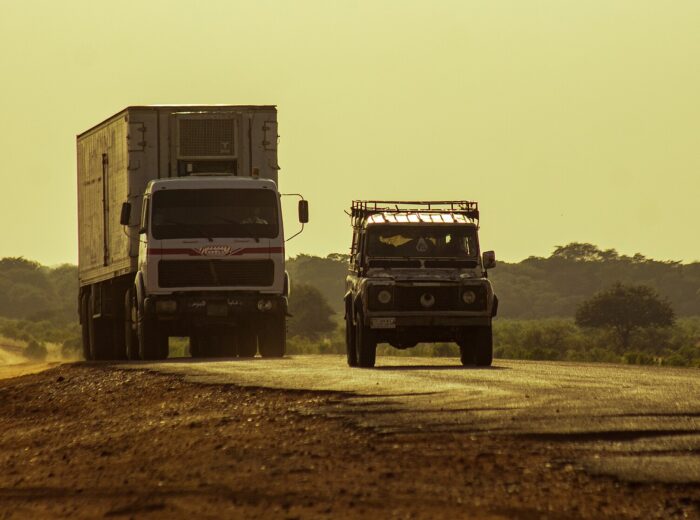
Sudan’s army and its allied Joint Force of armed movements said they took control of al-Khuwei, a strategic town in West Kordofan state, after heavy fighting with the paramilitary Rapid Support Forces (RSF) on Friday, November 13, according to a Joint Force statement and local media cited by Al Jazeera and Asharq Al-Awsat.
Competing accounts from the battlefield
In a statement issued late on Friday, the Joint Force of armed struggle movements, which fights alongside the Sudanese Armed Forces (SAF), said its units and the army had “liberated” al-Khuwei locality together with several nearby villages, including Sarif Ankosha and Um Labana, after what it described as fierce battles. The group said the RSF suffered heavy losses in personnel and equipment and that ground operations would continue across the country.
Al Jazeera reported on Saturday that the army had taken control of al-Khuwei on Friday, citing local media, and described the town as one of the main urban centres of West Kordofan and a key objective of a campaign launched several weeks ago.
The RSF has not publicly conceded the loss of the town. Platforms aligned with Tasis, the political coalition that includes the RSF, said the paramilitary had repelled an attack by the army and its allies around al-Khuwei and inflicted heavy losses on them, Asharq Al-Awsat reported. The newspaper had earlier noted conflicting accounts of the fighting, which resumed on Friday morning. Neither side’s claims could be independently verified.
A wider push across Kordofan
The fighting around al-Khuwei is part of a broader SAF offensive in the Kordofan region. According to Al Jazeera, the operation has so far broken the RSF siege of El Obeid, the capital of North Kordofan, and opened new routes for the army towards South Kordofan, Babanusa and the approaches to North Darfur, including a road linking al-Khuwei with al-Nuhud, a town near gold-mining areas.
The RSF, together with the Sudan People’s Liberation Movement-North faction led by Abdelaziz al-Hilu, still holds al-Nuhud and parts of South Kordofan, Al Jazeera said. Asharq Al-Awsat noted that the RSF controls most of the Darfur region in western Sudan as well as large areas of Kordofan, while the army has regained ground in central Sudan in recent months and controls the north and east of the country.
Analysts quoted by Al Jazeera said the army’s growing use of air power and drones had enabled advances along unexpected routes, and that the RSF could be forced to pull back towards its main support base in Darfur. Kordofan also carries economic weight: an economist cited by the channel said the Heglig and Balila oilfields in West Kordofan account for about 90 percent of Sudan’s oil output.
A war with a heavy civilian toll
The war between the SAF, led by General Abdel Fattah al-Burhan, and the RSF, commanded by Mohamed Hamdan “Hemedti” Dagalo, erupted in April 2023. Al Jazeera puts the death toll at about 150,000 and says more than 14 million people have been displaced, including some 4.5 million who fled to neighbouring countries such as Chad, Egypt and South Sudan.
The RSF captured el-Fasher, the capital of North Darfur, in October 2025 after a long siege. The United Nations has described Kordofan as the epicentre of the conflict, and most humanitarian operations in the region have been halted by insecurity, according to Al Jazeera.
Read more
 Iraqi PM al-Zaidi holds talks with al-Sharaa in first Damascus visit since Assad’s fallOctober 29, 2026
 Greece deploys firefighters, planes and helicopters to fight fire on Evia IslandJune 20, 2026
 Saudi PIF holds US equity portfolio steady at $12bnMay 17, 2026
 Costa Rica takes in a second group of migrants deported from the USApril 18, 2026