
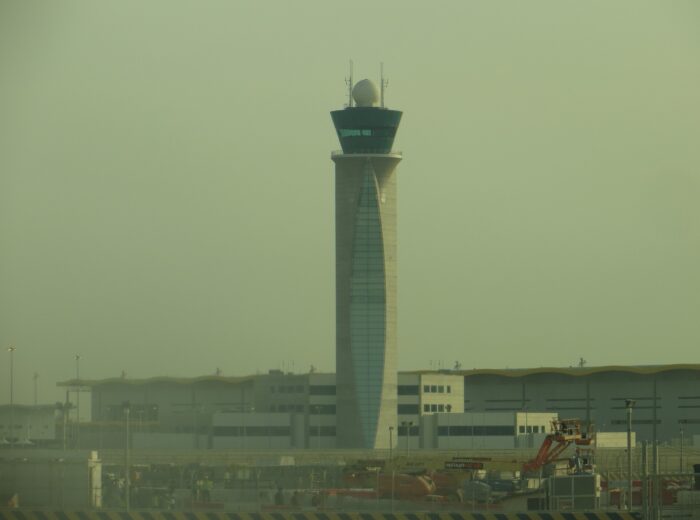
Qatar has begun managing air traffic over designated areas of international waters within the Doha Flight Information Region (FIR), the Qatar Civil Aviation Authority (QCAA) said on Thursday, 26 November 2026, in a move it described as the implementation of International Civil Aviation Organization (ICAO) Council Decision No. C-DEC 234/9. The announcement was carried by the Qatar News Agency (QNA).
The step widens the area for which Qatari air traffic services are responsible beyond the country’s own territory to include parts of the international airspace above the waters around it, in line with what the authority called “approved arrangements and agreements”.
Technical requirements completed
According to the QCAA, the handover followed the completion of all technical and operational requirements. These included updating air navigation services agreements with neighbouring states, upgrading navigation, surveillance and communication systems, and training national staff and air traffic controllers to operate within the expanded area of responsibility.
Neither the QCAA nor QNA published the precise boundaries of the newly covered areas or the number of flights expected to be affected.
What a flight information region covers
A flight information region is a block of airspace in which a designated authority provides flight information and alerting services to aircraft. ICAO assigns these regions, which can extend over the high seas, where no state holds sovereignty but where aircraft still need continuous air traffic services. Responsibility for such areas is set through ICAO decisions and agreements between neighbouring states.
In practice, the controllers responsible for a region handle aircraft crossing it, including overflights that do not land in the country concerned. In the Gulf, where airspace is dense and busy with long-haul traffic between Europe, Asia and Africa, the allocation of these areas is closely tied to the efficiency of regional air routes.
Authority cites ICAO confidence
Mohammed bin Faleh Al Hajri, who is in charge of managing the QCAA, said the step was an important milestone for Qatar’s civil aviation sector and the culmination of years of sustained work towards building an aviation system that meets the highest international standards.
He said the move reflected the confidence placed in Qatar by the international civil aviation community, represented by ICAO, and demonstrated the capabilities of the country’s aviation system, which he said rests on advanced infrastructure, modern air navigation systems and qualified national personnel. Al Hajri also thanked the Ministry of Transport and the authority’s partners, according to the QCAA statement.
The authority said the change underlined Qatar’s commitment to applying ICAO standards and to strengthening cooperation and coordination with regional states, with the aim of supporting the safety of air navigation, improving the flow of air traffic and keeping pace with the growth of air transport.
Coordination with neighbouring states
The QCAA said the updated air navigation services agreements with neighbouring states formed part of the preparations, and that the change reflects its continued commitment to coordination with the region’s aviation authorities. It added that the expanded responsibility is intended to support the safe and smooth flow of traffic and to keep pace with the growth of the air transport sector in accordance with international standards.
Sources:
- Qatar News Agency (QNA): Qatar assumes responsibility for air traffic management over international waters within Doha FIR
- Qatar Civil Aviation Authority: official statement
- Gulf Times: Qatar assumes responsibility for air traffic management over international waters
Read more
 Qatar’s Himyan national payment card can now be used in Oman, central bank saysNovember 26, 2026
 flyadeal to launch direct Dammam-Tabuk flights from 2 DecemberNovember 25, 2026
 Oman clears Flynas to fly Muscat-Jeddah route three times a week from December 1November 24, 2026
 Dubai’s new Al Maktoum airport to run a year of trials before first passengersNovember 22, 2026