
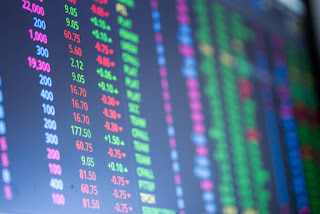
Saudi Arabia’s stock market ended Tuesday’s trading session on a positive note, with the Tadawul All Share Index (TASI) posting modest gains as investors continued to monitor corporate developments, oil prices, and broader economic indicators.
The benchmark TASI edged higher, supported by gains in selected large-cap and sector-leading stocks, while trading activity remained steady across the market. Investor sentiment was buoyed by improving confidence following recent economic data, including stronger foreign direct investment inflows and continued optimism surrounding the Kingdom’s Vision 2030 diversification agenda.
Trading was mixed beneath the headline index, with advancing stocks narrowly outweighing decliners. Market participants focused on banking, industrial, telecommunications, and energy shares, while selective buying in real estate and insurance companies also helped lift the benchmark.
The MSCI Tadawul 30 Index, which tracks the largest and most liquid listed companies, also finished higher, reflecting gains among blue-chip stocks. Meanwhile, the Nomu Parallel Market recorded mixed performance as investors continued to rotate toward companies with stronger earnings prospects.
Among the session’s biggest gainers were companies benefiting from renewed buying interest following recent declines, while a handful of profit-taking moves weighed on stocks that had posted strong gains in previous sessions. Analysts noted that investors remain highly selective, favoring companies with solid fundamentals, resilient earnings growth, and attractive dividend prospects.
Market sentiment also continued to receive support from relatively stable crude oil prices. Since energy revenues remain a key driver of Saudi Arabia’s economy, movements in oil markets often influence investor confidence on the Saudi Exchange.
Investors are now awaiting the release of second-quarter corporate earnings, which are expected to provide a clearer picture of how listed companies are performing amid ongoing economic diversification and government spending on major projects. Financial institutions, petrochemical producers, construction firms, and consumer companies are expected to be among the most closely watched sectors.
Analysts say the market continues to trade within a relatively cautious range, with investors balancing positive domestic economic indicators—including stronger investment flows, expanding non-oil activity, and infrastructure spending—against external risks such as global interest rate expectations, geopolitical developments, and volatility in international energy markets.
Despite these uncertainties, Saudi Arabia remains the largest equity market in the Middle East, and investor confidence continues to be supported by ongoing reforms, increasing foreign participation, and the steady pipeline of Vision 2030 projects, which are expected to generate new investment opportunities across multiple sectors.
Read more
 Ma’aden’s Aluminum and Gold Businesses Drive Q2 Revenue Growth, Offsetting a Decline in PhosphateAugust 10, 2026
 Saudi non-oil business activity remains strong as PMI stands at 53.1 in JulyAugust 4, 2026
 Rising Middle East Tensions Push Inflation Higher in FranceAugust 1, 2026
 SAMA approves Credit Line as Saudi finance companies reach 77July 13, 2026